Showing posts with label Deaths. Show all posts

September 7, 2011

Covanta Dioxins 250 Times Above Safety. [Connecticut. 2011]

Having been moved to another parish, TD Hogan's sneering Sarah Carey won't be reporting this.  Neither will DCC funded Professor Tol Pot of ESRI who is too busy promoting incineration and censoring comments on the Irish Economy blog. 
  
US Scientists say there is no safe level for dioxins.  Nevertheless politicians set a convenient "safety level" totally independently of industry money and golfing events. 


Covanta has a 25 year record of violating air pollution laws.  Below is a recent report about reckless Covanta dioxins releases in Connecticut.    Click here for a report from 2010.


Guess what these cowboys will do to the health of the one million people around Dublin Bay.


 COVANTA VIOLATES MASSACHUSETTS.


COVANTA VIOLATES PENNSYLVANIA.


COVANTA POLLUTES VIRGINIA


COVANTA ALREADY POLLUTES IRELAND.


____________


http://www.sbpost.ie/news/ireland/poolbeg-firm-to-pay-400000-in-compensation-58179.html

http://www.sbpost.ie/news/ireland/poolbeg-firm-to-pay-400000-in-compensation-58179.html

January 25, 2010

'Chemical Ali' executed in Iraq

Chemical Ali's final death sentence came on January 17th for Halabja, when the Iraqi army used poison gas against Kurds. Around 5,000 people were believed to have been killed.   

Meanwhile in Dublin, Ireland, an Incinerator at Poolbeg producing effectively unmonitored microparticles, cynically unmonitored dioxins and cosmetically sampled chemicals could reduce life expectancy by 100,000 man-years. Each persons life is crippled by bad health for months to years.  That's perhaps crudely equivalent to 125 deaths per year for each of the Poolbeg Incinerator's first 15 years.  Not quite as bad as Chemical Ali, but check out the ethics policy of Inselaffe Engineers Ireland. 


Meanwhile in Dublin a pillar of society from Cavan, a long cowpat away from Sandymount's foreshore and seabirds, and whose firm's truth is massaged by Dublin Council (Judge McKechnie) spins:

 There is no credible evidence that modern incinerators impose any risk to health.
PJ RUDDEN,
Director, RPS Group,
I
reland.

Engineers Ireland Vice President 

 No credible evidence?   Does PJ Rudden deserves a banana in the The Banana Bar?     Perhaps PJ used the Banana Bar's dexterity to inform the contract - perhaps not?  


 RPS is paid by unelected officials in Dublin Council to promote the Poolbeg Incinerator.  RPS's statement was issued a full two months after DCC's partner Covanta was again fined for seriously breaking the law in America.  Judge McKechnie has stated in an unproved judgement that DCC massaged RPS reports and unduly influenced a public process.  

Doesn't breaking the law and polluting the air kill people or damage their health no matter how "modern" the waste-to-toxins incinerator?


---------------

Bord Pleanála acknowledges that the current air pollution burden in Poolbeg from PM-10 air pollution particles is already at the dangerous level of 50 µg/m3.  A Poolbeg Incinerator will increase air pollution above 50 µg/m3, increasing the number of deaths from heart problems and possibly from various cancers.


For Ringsend/Poolbeg the existing air pollution level causes the risk of death from deep vein thrombosis to be ten to twenty times higher than in a relatively clean-air suburb (see chart: read this science).   Added air pollution from an incinerator will increase the relative death risk towards the 20 to 40 times higher level.


Politicians have ignored the science, ignored the scientists in Bord Pleanala and EPA-Ireland, recklessly sidelined Health Impact Reports and decided Poolbeg is an excellent location for further toxic air pollution from a Waste-To-Toxics incinerator!  It's a safe bet the politicians did this via the director level political cronies they appointed to Bord Pleanala and in EPA.   

December 10, 2009

Ringsend Death Risk is 20-80 Times Higher With Poolbeg Incinerator.


Added Air Pollution From Poolbeg Incinerator 
May Increase Deaths Twenty To Forty Times.


Chart: Relative risk of deep vein thrombosis from fine particulate matter.


Interpretation


Bord Pleanála acknowledges that the current air pollution burden in Poolbeg from PM-10 air pollution particles is already at the dangerous level of 50 µg/m3.  A Poolbeg Incinerator will increase air pollution above 50 µg/m3, increasing the number of deaths from heart problems and possibly from various cancers.


For Ringsend/Poolbeg the existing air pollution level causes the risk of death from deep vein thrombosis to be ten to twenty times higher than in a relatively clean-air suburb (see chart: read this science).   Added air pollution from an incinerator will increase the relative death risk towards the 20 to 40 times higher level.


Politicians have ignored the science, ignored the scientists in Bord Pleanala and EPA-Ireland, recklessly sidelined Health Impact Reports and decided Poolbeg is an excellent location for further toxic air pollution from a Waste-To-Toxics incinerator!  It's a safe bet the politicians did this via the director level political cronies they appointed to Bord Pleanala and in EPA.   


  • Dublin City Council's Poolbeg Sewage Factory is managed by politicians.  A Poolbeg incinerator managed to the same incompetent standard will increase the relative death risk by20 to 40 times (even 80 times).
  • You can not prove air pollution particles have damaged your health.


Deadliest Particles are Smaller Than PM-10


The May 2008 Italian research is for PM10 particles.   Governments make sure not to measure the even more deadly PM2.5 and PM1.0 particles.   This is cynical preparation for the "no evidence" excuse used by industry experts, a tobacco industry best-practice.


The EPA-Ireland website does not list site-specific-sources of deadly PM pollution at Poolbeg.  The EPA-USA has similar data on-line. 

Footnote:  The Irish Independent reported in early-2009 that the former Ten Year Director of EPA-Ireland had been hired by Covanta/Energy-Answers.  That West Dublin incinerator was cancelled.


__________________________________________
Science


Vol. 168 No. 9, May 12, 2008
Original Investigation

Exposure to Particulate Air Pollution and Risk of Deep Vein Thrombosis

Andrea Baccarelli, MD, PhD; Ida Martinelli, MD; Antonella Zanobetti, PhD; Paolo Grillo, MD; Li-Fang Hou, PhD; Pier A. Bertazzi, MD; Pier Mannuccio Mannucci, MD; Joel Schwartz, PhD

Arch Intern Med. 2008;168(9):920-927

Result
Each increase of 10 µg/m3 in PM10 was associated with a 70% increase in
deep vein thrombosis risk.

___________________________________

The chart demonstrates the observed relationship between the relative risk of DVT and the level of particulate matter of less than 10 µm in aerodynamic diameter (PM10) in the year preceding the diagnosis.

These results suggest a linear relationship between exposure and risk, though the 95% confidence intervals (shaded areas) are wide at the extremes of exposure. Risk is depicted in comparison with a reference value of 12.0 µg/m3 (minimum observed PM10 level).

The histogram in the bottom part illustrates the density of exposure distribution for air pollution. 


Risk estimates are adjusted for age, sex, year of diagnosis, area of residence, body mass index, education, current use of oral contraceptives or hormone therapy, Leiden V or prothrombin mutations, season, and ambient temperature.

__________________________________________
Check It Yourself at:    http://archinte.ama-assn.org/cgi/content/full/168/9/920


Reposted December 2009.

June 19, 2009

Incinerators Nanoparticles are safe. Trust Us.

Tiny particles from incinerators will reduce your life by up to two years.

Nobody understands the science. That's why we have Fianna Fail.

You can trust your clever politicians to protect you by directing their political appointees, dressed up as scientists, at EPA, Bord Pleanala, and elsewhere.
_________________
http://www.irishtimes.com/newspaper/ireland/2009/0610/1224248531633.html

Expert challenges risk study for incinerator

LOUISE ROSEINGRAVE

Wed, Jun 10, 2009

TOXICOLOGICAL EFFECTS of nano-particles such as those produced from an incinerator stack can be responsible for exacerbating human health problems including asthma, bronchitis and heart disease, according to a scientific expert who gave evidence on behalf of objectors at a public hearing yesterday.

Prof C Vyvyan Howard described Indaver Ireland’s risk assessment of possible health problems associated with a proposed toxic waste incinerator at Ringaskiddy in Cork as “simplistic” and “fundamentally flawed”.

His claims were disputed by Indaver Ireland. Prof Howard, who is in charge of of bioimaging at the University of Ulster, has written and spoken in a variety of forums to draw attention to the threat posed by pollutants to developing foetuses and infants.

Speaking on behalf of anti-incinerator campaign group Cork Harbour Alliance for a Safe Environment at a hearing on the proposed incinerator yesterday, Prof Howard, described as a medically qualified toxico-pathologist, claimed there were airborne particles for which there was no known safe level, and that Indaver Ireland’s risk assessment did not cover the emittance of such particles. “The risk assessment in relation to particles that has been undertaken by Indaver is rather simplistic and appears to ignore the very significant contribution made to particulate burdens made by sulphur dioxide and especially nitrous oxide emissions.”

Prof Howard said while effects of individual toxins were known, the effects of multiple toxins in the air was unknown, and research into such effects was difficult.

Indaver Ireland’s risk assessment is based on the effects of individual toxins as per Environmental Protection Agency air quality standards.

“This approach is fundamentally flawed for those emissions like particles, for which no safe level can be demonstrated,” Prof Howard said.

Air pollution levels well within legal limits were killing people, he claimed, “especially older people and those with chronic heart and lung ailments”. Children and foetuses were particularly at risk from airborne pollutant particles, as their immune system and lungs were not fully developed, he said.

“There can be no doubt that children and even the foetus are particularly vulnerable to particle air pollutants, while this has been largely overlooked in setting current standards and controls,” he said.

He cited a review by scientists Joachim Heinrich and Remy Slama showing fine particle pollutants had been associated with infant mortality, impaired lung function and, less consistently, with sudden infant death syndrome.

In his report, Prof Howard claimed Indaver had “completely omitted any consideration of secondary particles and their impacts from their assessments”, which he said can account for a major fraction of the particles emitted by incinerators, despite filtration.

It was claimed that a high proportion of ultra-fine particles emitted through the incineration process evaded filtration systems.

“The subsequent direct uptake of these respirable particles and the ready transfer from the lungs into the bloodstream may be part of the reason that traditional toxicology is at a loss to explain the level of impacts for such apparently low exposures,” he said.

An Indaver Ireland spokesman said Prof Howard’s opinion was “at odds” with views of the World Health Organisation, EU and EPA. “Dioxins are all around us every day. Traffic, home heating and agriculture are among the main dioxin contributors. WHO and EU set safe level limits for dioxin emissions, and expert analysis has shown that the proposed development will have a minuscule effect,” the spokesman said.

The hearing is expected to continue until the end of next week.

© 2009 The Irish Times

____________________

February 10, 2009

Poolbeg Incinerator Style Pollution Costs California $28 Billion Annually

Poolbeg is already polluted above EU air pollution standards. The Poolbeg Incinerator to be operated by an offshore-entity will add to the particulates burden. The effects of the microscopic PM2.5 and PM1.0 particulates are not understood, they are not measured, but in a parallel to the Tobacco Industry, the premature deaths could lead to the Irish Government being sued for Eight Billion Euro. Send a text to John Gormley and to BIFFO.

Bord Pleanala rejected an incinerator at Rathcoole because of air pollution and traffic concerns - both are far worse at Poolbeg and will cause many more premature deaths, except for horses. In a Dail non-response [Dail reference:12568/07] Dick Roach passively confirmed there will be up to 300 premature deaths each year.
  • At least one Bord Pleanala Director comes from the 'consulting company' used by DCC to promote the waste-to-toxins incinerator.
  • The Irish EPA is apparently totally compromised at Director level in a scenario not unlike Anglo-Irish and the Developers Autocracy (DDDA).
  • A small incinerator in Tipperary was also rejected by Bord Pleanala - because it would harm horses.

California's standards are far more advanced then the EU standard which is apparently hobbled by BASF (IG Farben).

__________________

California Economy Loses $28 Billion Yearly due to Health Effects of Pollution

http://lifeofearth.org/2008/11/california-economy-loses-28-billion-yearly-due-to-health-effects-of-pollution.html

  • The California economy loses about $28 billion annually due to premature deaths and illnesses linked to ozone and particulates

  • Most of those costs, about $25 billion, are connected to roughly 3,000 smog-related deaths each year, but additional factors include work and school absences, emergency room visits, and asthma attacks and other respiratory illnesses

  • The savings would come from about 3,800 fewer premature deaths among those age 30 and older; 1.2 million fewer days of school absences; 2 million fewer days of respiratory problems in children; 467,000 fewer lost days of work and 2,700 fewer hospital admissions, according to the study.

  • The study noted that attaining the federal standard for exposure to particulates would save more lives than lowering the number of motor vehicle fatalities to zero in most of the regions examined.

Click here for full article, or read the article posted as a comment. Particulates are caused by diesel cars and incinerators.


________
Deadly Particles (PM2.5), Poolbeg Incinerator, Waste-To-Toxins, Bord Pleanala, EPA, IG Farben-BASF,

January 29, 2009

Europe to prosecute Britain for breaking air pollution laws

Europe to prosecute Britain for breaking air pollution laws

Environment commissioner begins proceedings for failure to reduce particulate pollution from traffic and industry

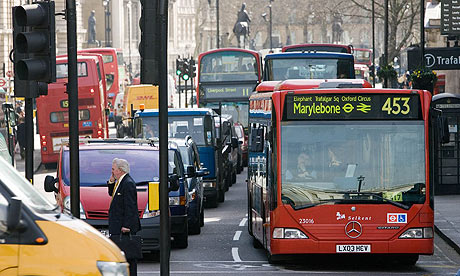
A bus stands in heavy traffic in Trafalgar Square, London

A bus stands in heavy traffic in Trafalgar Square, London. Photograph: Tim Graham/Getty images

Europe is prosecuting Britain for consistently breaking air pollution laws and endangering people's health in urban areas.

Legal proceedings against the government were started today by the EU environment commissioner, Stavros Dimas, and could result in unlimited daily fines.

Britain had been given nearly 10 years by Europe to reduce its levels of the minute, sooty "particulate matter" known as PM10s, which are mainly emitted by industry and traffic.

But EU documents seen by the Guardian earlier this month showed that Britain had been breaking the regulations, now part of UK law, for three years. More than 20 cities and conurbations were found to have dangerous levels of particulate matter between 2005-7.

In a statement, the commission said we have "started infringement proceedings against the United Kingdom for failing to comply with the EU's air quality standard for dangerous airborne particles known as PM10. These particles can cause asthma, cardiovascular problems, lung cancer and premature death."

The decision to take Britain to the court of justice will embarrass the government because it has had since 1999 to come up with a plan to reduce PM10 levels, but has failed to do so. All other major EU countries have submitted plans and successfully negotiated a time extension.

This week the government launched a consultation on the issue, but this was widely seen in Europe as a delaying tactic. The UK has two months to respond to the EU's letter before further action may be taken.

Dimas showed his exasperation with Britain. "Air pollution has serious impacts on health and compliance with the standards must be our utmost priority. It is essential that where time extensions are not applicable the standards are fully respected."

Air pollution near many roads in British cities averages well over twice the UN's World Health Organisation maximum recommended level. If Britain is to reduce PM10 levels it will have to substantially reduce traffic congestion, which could mean unpopular congestion charging and low emission zones.

A spokesman at the Department for Environment, Food and Rural Affairs said: "The UK, along with other member states, intends to apply for a time extension to meet PM10 air quality limits. Twenty-four out of 27 member states also reported breaches of the limits in 2007. We expect to apply for this extension following a public consultation that began on Tuesday 27 January."

But Caroline Lucas, leader of the Green party and MEP for the South East, said the move by the commission was a "damning indictment of Labour's aspirations to position itself as having any credibility on the environment at all". And she said it sent a clear signal to ministers who were going ahead with plans to expand Heathrow airport despite concerns that more planes will push pollution levels up even further.

"Legal action is long overdue," added Simon Birkett, director of Clean Air for London. "This should be a real wake up call to Britain to take air pollution seriously."

In a coincidence, the government also released data on air quality for 2008, showing that particulate pollution varied from year to year, and while there was a long-term decline, the fall was not fast enough to meet the new limits.

A Defra report said that "in urban areas, air pollution in 2008 was recorded as moderate or higher on 27 days on average per site, compared with 24 days in 2007, and 59 days in 1993".

January 15, 2009

Chart & Cancer Image Submitted to EPA-Ireland Oral Hearing, April 2008.

Chart Submitted to EPA-Ireland Oral Hearing, April 2008.
Air Pollution Particles Inside Cancer Cells in Human Liver.


Chart Submitted to EPA-Ireland Oral Hearing, April 2008.
EU Standards are Compromised.
EU Allows 25μg per cubic metre.
WHO Urges 10μg per cubic metre.


  • A reduction in the yearly average PM2.5 particulates to 15μg per cubic metre would result in life expectancy gains, at age 30, of between 1 month and 2 years.

The US National Ambient Air Quality Standard for PM 2.5 particulates was introduced into the USA in 1997 with a mean annual limit of 15μg per cubic metre. This had measurable health benefits.

California has a stricter limit of either
10μg or 12μg per cubic metre.

The latest EU standard for PM 2.5 particulates is 25μg per cubic metre.

An annual mean limit for PM 2.5 particulates is to be introduced into Scotland in 2010 and this will be 12μg per cubic metre. An annual mean target for PM 2.5 particulates is to be introduced into the UK in 2020 and this will be 25μg per cubic metre. Many will wonder why the difference is so vast when the science is the same.


Deaths, EPA, PM2.5, Deadly Particles (PM2.5), Waste-To-Toxins, wastetoenergy, Health,

European Respiratory Society: European Union policy could cost you 2 years of life.

European Union policy could cost you 2 years of life.

The European Respiratory Society has published its concern about the
mismatch between European Union policy and the best scientific evidence.

They state that a reduction in the yearly average PM2.5 particulates to 15μg per cubic metre
(c) would result in life expectancy gains, at age 30, of between 1 month and 2 years.

They point out that the benefits of implementing stringent air pollution legislation would outweigh the costs. These recommendations are sensible and based on sound science.

A programme of building incinerators would unfortunately achieve the opposite: they would increase particulate pollution, reduce life expectancy and would be at odds with the best science.

Statements by leading researchers include the following:
“the magnitude of the association between fine particles and mortality suggests that controlling fine particles would result in saving thousands of early deaths each year” (Schwartz)

and

“there is consistent evidence that fine particulates are associated with increased all cause, cardiac and respiratory mortality. These findings strengthen the case for controlling the levels of respiratory particulates in outdoor air”

__________

c) The US National Ambient Air Quality Standard for PM 2.5 particulates was introduced into the USA in 1997 with a mean annual limit of 15μg per cubic metre. This had measurable health benefits.

An annual mean limit for PM 2.5 particulates is to be introduced into Scotland in 2010 and this will be 12μg per cubic metre. An annual mean target for PM 2.5 particulates is to be introduced into the UK in 2020 and this will be 25μg per cubic metre. Many will wonder why the difference is so vast when the science is the same.

Deaths, EPA, PM2.5, Deadly Particles (PM2.5), Waste-To-Toxins, wastetoenergy, Health,

Incineration Health Effects Assessment by the WHO and Other Authorities

SCIENCE: Incineration Health Effects Assessment by the WHO and Other Authorities


Assessment by the WHO and Other Authorities


Based on World Health Organisation Air Quality Guidelines the British Society for Ecological Medicine has estimated that a 1μg per cubic metre increase in PM2.5 particulates(a) would lead to a reduced life expectancy of 40 days per person over 15 years(b).

Although this figure appears small they note that the public health implications are large and the effect on a typical population of 250,000 surrounding an incinerator would be a loss of 27,500 man-years of life over a 15 year time period.

This figure gives an indication of the likely loss of life from any major source of PM2.5 particulates. In addition, incinerators normally operate for much longer periods than the 15 years quoted here. Note that the estimated loss of life here is likely to be an underestimate as it is from particulates alone and not from other toxic substances.

_______________
a) A very conservative estimate of the level of increase that would be expected around large incinerators.

b) This equals a reduction of life expectancy of 1.1 years for each 10μg per cubic metre increase in PM2.5 particulates

The US National Ambient Air Quality Standard for PM 2.5 particulates was introduced into the USA in 1997 with a mean annual limit of 15μg per cubic metre. This had measurable health benefits.

An annual mean limit for PM 2.5 particulates is to be introduced into Scotland in 2010 and this will be 12μg per cubic metre. An annual mean target for PM 2.5 particulates is to be introduced into the UK in 2020 and this will be 25μg per cubic metre. Many will wonder why the difference is so vast when the science is the same.


Waste-To-Toxins, wastetoenergy, Deadly Particles (PM2.5), Poolbeg Incinerator, Dublin Bay Incinerator, Dublin City Council, EPA, Bord Pleanala, Health, Deaths, The Big Lie,

Poolbeg Incinerator Could Cost 100,000 man-years of life it its first 15 years


An Incinerator at Poolbeg could
reduce life expectancy by 100,000 man-years.
That's in its first 15 years (a).


An incinerator can be modeled as a deadly particles generator. A 70 page report from a credible medical society on the reduced life expectancy caused by incineration and deadly particles(b) is here so you make your own judgments.

Pollution in east Dublin already exceeds the compromised EU standards and is significantly above the more protective US air quality standards. The Bord Pleanala Inspector's report noted the compromised level of air pollution in Poolbeg is already at or above the EU norms but his actions will have been dictated by the politically appointed directors at Bord Pleanala.

The submission to the EPA Oral Hearing by a member of the St Patrick's rowing club in Ringsend illustrates concerns on cancer, ill health and premature deaths in a polluted environment. DCC refuses to run a Baseline Health Study for the area and cynically washes its hands by referring all such requests to the less than inspiring Health Service Executive (where nobody washes hands). The EPA Oral Hearing apparently accepted this Big Lie manouver.

The EPA's directors are political appointees of Fianna Fail - at the EPA it would appear the gamekeepers have turned into poachers, and vice versa. Is the
politically dominated EPA any more credible than the Developer's Anglo-Irish Bank, the Dublin Developer's Autocracy (DDDA) or the Developer's Irish Financial Regulator?

In addition to invisible microscopic particles an incinerator in Dublin Bay would pump hundreds of thousands of tonnes of pollution into the air over Dublin each year. The total volume of waste is actually increased by waste-to-toxins incineration and is not reduced as claimed by industry Big Lies. For example, in addition to toxic ash and hundreds of other compounds, each tonne of waste generates an additional tonne of CO2. This CO2 is pumped up the chimney where it circles the world.

Big Lie Caution: Dublin City Council has spent €19,000,000 to promote its cynical one-sided case for an Incinerator at Poolbeg. DCC has used multiple Big Lies, including the Big Lie of selective witholding of data, it seems. For instance, DCC has apparently not publicly costed nor quantified the serious health impacts in terms of compromised health and premature deaths - apart from spin such as 'you can not prove that'. This is the Tobacco Industry Big Lie in practice.

The Cork Harbour Alliance for a Safe Environment (CHASE) has other useful information.
The Green-Fianna-Fail government has penalised Corks' citizens by presenting CHASE with a legal bill of €50,000. Contrast this to the €19,000,000 of your money given to the public service patriots in developer-lead Dublin City Council. George Bush would say the DCC fokes are Fair & Balanced.

__________________________________________


a)
Basis: June 2008 Estimates by British Society for Ecological Medicine using World Health Organisation Air Quality Guidelines.
Based on a very conservative estimate of the level of increase that would be expected around large incinerators in a population of 250,000.


There is a reduction of life expectancy of 1.1 years for each 10μg per cubic metre increase in PM2.5 particulates

The US National Ambient Air Quality Standard for PM 2.5 particulates was introduced into the USA in 1997 with a mean annual limit of 15μg per cubic metre. This had measurable health benefits.

b) Deadly particles - see pages 15-16.


_____________________
Waste-To-Toxins, wastetoenergy, Deadly Particles (PM2.5), Poolbeg Incinerator, Dublin Bay Incinerator, Dublin City Council, EPA, Bord Pleanala, Health, Deaths, The Big Lie, 

First posted: January 15, 2009.

October 21, 2008

Medical Cards & Incineration

Who Needs a Medical Card When They Will Be Killed Prematurely?

The planned Dublin Bay Incinerator at Poolbeg will cause up to 300 premature deaths per year (1). Perhaps that means an extra three thousand sick people per year.

Boston, not Berlin.

With 3,000 extra sick people why not sneak in Not-Universal American style health care! That adds to GNP, will increase growth, and will pull The Galway Tent out of the recession.

The Bush controlled US Environmental Protection Agency values Human Resources at about $7.22 million(2). So let's get rid of health care for old people, they have no economic value apart from their life-time savings.


_______________
  1. Passively confirmed by Dick Roach (Dail Ref: 12568/07). http://galwaytent.blogspot.com/2008/04/incineration-amsterdam-example-300.html

  2. "By reducing the value of human life, which is really a devious way of cooking the books, the perceived benefits of cleaning up the air seem less," said Frank O'Donnell of the District-based group Clean Air Watch. http://galwaytent.blogspot.com/2008/07/cosmic-markdown-epa-says-life-is-worth.html

  3. A small incinerator in rural Tippereary was stopped by Bord Pleanala after lawyers for John Magnier’s Coolmore group had argued that the facility would be prejudicial to animal health.

  4. Ringsend Death Risk is 20-80 Times Higher With Incinerator.

http://galwaytent.blogspot.com/2008/05/ringsend-death-risk-already-10-20-times.html


___________________


Health Hazards From Chemicals Are Not Known

_________________________


Incinerator Will Increase Deaths By
Twenty To Eighty Times.

______________________________________

Environment Minister Passively Confirms 300 Deaths Per Year.
_________________________________________________________

July 25, 2008

Cosmic Markdown: EPA Says Life Is Worth Less

Lifesaving pollution reductions are not worth the cost. Except for Billionaires horses in Tipperary ...
_______________________________

Cosmic Markdown: EPA Says Life Is Worth Less

http://www.washingtonpost.com/wp-dyn/content/story/2008/07/19/ST2008071900185.html

By David A. Fahrenthold
Washington Post Staff Writer
Saturday, July 19, 2008; A01

Someplace else, people might tell you that human life is priceless. In Washington, the federal government has appraised it like a '96 Camaro with bad brakes.

Last week, it was revealed that an Environmental Protection Agency office had lowered its official estimate of life's value, from about $8.04 million to about $7.22 million. That decision has put a spotlight on the concept of the "Value of a Statistical Life," in which the Washington bureaucracy takes on a question usually left to preachers and poets.

This value is routinely calculated by several agencies, each putting its own dollar figure on the worth of life -- not any particular person's life, just that of a generic American. The figure is then used to judge whether potentially lifesaving policy measures are really worth the cost.

A human life, based on an economic analysis grounded in observations of everyday Americans, typically turns out to be worth $5 million to $8 million -- about as much as a mega-mansion or a middle infielder.

Now, for the first time, the EPA has used this little-known process to devalue life, something that environmentalists say could set a scary precedent, making it seem that lifesaving pollution reductions are not worth the cost.

"By reducing the value of human life, which is really a devious way of cooking the books, the perceived benefits of cleaning up the air seem less," said Frank O'Donnell of the District-based group Clean Air Watch. "That has the effect of weakening the case for pollution cleanup."

To grasp the mind-bending concept of a Blue Book value on life, government officials say it is important to remember that they are not thinking about anyone specifi c. That happens in lawsuits, when plaintiffs seek to be compensated for a life lost -- and there, it can involve personal factors such as the deceased's lost income.

Here, officials say, they are trying instead to come up with the value of a typical life, without any personal information attached.

They might know, for instance, that a new cut in air pollution will save 50 lives a year -- though they don't know who those people might be. Still they want to decide whether saving them is worth the cost, officials say, and it helps to assign a dollar value to each life saved.

An example of this kind of analysis was used by the federal Consumer Product Safety Commission this year:

A proposal to make mattresses less flammable was expected to cost the industry $343 million to implement. But, a spokeswoman said, the move was also expected to save 270 people. The commission calculated that each life was worth $5 million, which meant a benefit of about $1.3 billion.

That was greater than the expense, she said, so the move made sense.

"It is, sometimes, a weird idea" to weigh lives against other costs, acknowledged Jack Wells, chief economist for the U.S. Department of Transportation. "But, if you think about it, people behave that way all the time. . . . We could eliminate a lot of the [highway] fatalities by imposing a 10-mile-per-hour speed limit." But, he said, society implicitly tolerates greater highway deaths in return for the economic benefits of faster travel.

But how do you put a dollar value on a life, even in a generic sense?

It wouldn't work for researchers to survey Americans at gunpoint and ask how much they would pay not to die. Instead, an unlikely academic field has grown up to extrapolate life's value from the everyday decisions of average Americans.

Researchers try to figure out how much money it takes for people to accept slightly bigger risks, such as a more dangerous job. They also look at how much people will pay to make their daily risks smaller -- such as buying a bike helmet or a safer car.

"How much are you willing to pay for a small reduction . . . in the probability that you will die?" asked Joe Aldy, a fellow at the D.C.-based think tank Resources for the Future.

The rest is more or less multiplication: If someone will accept a 1-in-10,000 chance of death for $500, then the value of life must be 10,000 times $500, or $5 million.

But it is one thing to calculate the numbers and another to explain them to the public. The EPA has been fighting that battle since last week, when the Associated Press revealed that the agency's air office had reduced its Value of a Statistical Life.

Al McGartland, the director of the agency's National Center for Environmental Economics, said the air office had revised the old figure in 2004 after new academic research showed it was skewed too high.

"It's based on better methods," McGartland said of the air office's assessment. He said the new number would increase over time, in part because of inflation.

The EPA's value for life remains one of the highest. Earlier this year, the Department of Transportation raised its value -- but even after the increase, it stood at $5.8 million, more than a million dollars less than the EPA's.

Still, environmental activists said the decision made it more likely that the EPA's regulations would allow greater air pollution, because deaths triggered by the pollution would seem to count for less. Experts say serious air pollution can make heart and lung conditions worse, sometimes resulting in death.

One of the researchers whom the EPA cited said he was puzzled at the agency's calculations on the value of a human life.

"Nobody's ever lowered it," said W. Kip Viscusi of Vanderbilt University. EPA came closest: In 2003, it tried to count senior citizens' lives as worth less than those of other adults. After a loud outcry from seniors, the agency backed off.

Viscusi said most researchers believe the value should generally be going up, as Americans have become wealthier and more willing to spend money to avoid risks.

"I personally wasn't in favor of lowering the value of life, let's put it that way," he said.

Lowering the value of life. In some bureaucratic corners of Washington, it is the kind of phrase that nobody blinks at anymore.

But it still can sound odd to those accustomed to thinking of life's worth in other ways.

Daniel Zemel, rabbi at Temple Micah on Wisconsin Avenue NW, said Wednesday that the idea of a dollar value on life brings to mind the teaching that "you put one human life on the scale, and you put the rest of the world on the scale, the scale is balanced equally."

Zemel said h e could understand officials' logic for making decisions this way. But he said he would counsel anybody whose job involved "Statistical Lives" to think about what they really represent.

"Numbers on a piece of paper are, at the end of the day, somewhere out there," Zemel said, "real people whose lives are being impacted."

Staff researcher Meg Smith contributed to this report.

July 16, 2008

The Urban Beach Big Lie From DCC-DDDA

DCC-DDDA's current platform for The Big Lie is the Urban Beach.

Apparently DCC-DDDA is spending large sums of Big Lie cash with The Mad Men to make itself look cool and friendly. The Hawaiʻi theme used in DDDA messaging is curious as The Big Island has just rejected its proposed waste-to-toxics incinerator.

Cynically, DCC-DDDA makes what appears to be the barest legally required minimal effort to go through the motions to inform the public of its actual goals and tactics, allegedly. Newspapers fail to gain full disclosure to DCC-DDDA information even when using the Freedom of Information Act. Is it cynical or just curious to place a small non-colour legal notice in a newspaper on a bank holiday weekend? Is this best practice as a means of informing the public?

________________

DCC-DDDA is shorthand for DCC and DDDA. Legally they may be distinct sub-entities of a larger entity, just as Covanta-Poolbeg and Energy-Answers-Rathcoole appear to be legally distinct entities. In practice, many people view DCC and DDDA to be the same entity resulting in cynically Balkanised control of land planning around Dublin Bay. It is very curious that an entity owning equity in property on Sandymount Strand also controls planning for the same property. And reports to a government minister in a constituency which is curiously being split, or possibly greenmandered, against al historic logic.

DCC-DDDA's propaganda about The Urban Beach is totally absurd. DCC-DDDA in its former guise as Dublin Corpo filled in the real urban beach at Beach Road, after easy access to the beach by tram was removed. The community gain is the degraded health of local residents, studies of which have been cynically avoided.

______________________

Dail Questions on DCC-DDDA's Real Urban Beach

Dáil Éireann - Volume 174 - 29 April, 1959

http://historical-debates.oireachtas.ie/D/0174/D.0174.195904290023.html

Questions. Oral Answers.

- Sandymount Dump.

25. Dr. Browne asked the Minister for Local Government whether he is aware that the continued indiscriminate dumping of rubbish at Sandymount is causing a serious nuisance and inconvenience to the local residents, and constitutes a serious danger to their health in so far as it is likely to become a breeding ground for rats, disease bearing flies, mosquitoes, and other pests; and if he will take steps to advise the health authority responsible that, if the dumping cannot be discontinued, it should be so controlled as to obviate the dangers to health which it at present constitutes.

Mr. Blaney: I have seen some newspaper references to this matter but I have received no complaints about it. I understand that the Dublin Corporation takes all practicable steps to ensure that the dumping involves no danger to health and that any temporary injury to amenity is kept within the narrowest possible limits.

July 12, 2008

Ringsend Health Impact Big Lies?

Ringsend Health Impact Big Lies?

Even an expert using the required diplomatic language says work from DCC is "inadequate" and even "derisory".

Many people, but certainly not all, would conclude that DCC has apparently produced another Big Lie. This is a Big Lie with the potential to be used by DCC-DDDA's well-funded PR agency or by the Marketing Communication departments of foreign Waste-To-Toxins corporations to spread disinformation about your health or your early death. With the Big Lie established literally on a European Beachhead, the Big Lie can then be re-purposed worldwide including in China.
___________________________________


Below are Key Sentences from The human health impact of the proposed municipal waste incinerator at Ringsend: a critique of the health assessment in the EIS submitted with the planning application.

Dr. Anthony Staines,
Senior Lecturer in Epidemiology,
Dept. of Public Health Medicine,
University College Dublin,

The whole document is here:
http://fiasco.ie/incinerator/resources/Critique_of_Health_Assessment_in_EIS_-_Dr_Anthony_Staines.pdf

Key Sentences
The Environmental Impact Statement (EIS) contains several sections addressing health issues. The main discussion is in Chapter 13 'Impact on Human Beings'.
  • The process use to carry out this piece of work is unclear, and no specific justification or rationale is given for it.
  • In no case is there any serious consideration of the actual impacts of the estimated emissions on people in the local community or on human health.
  • It is at best careless, and more realistically reckless, to proceed with a major development without considering methods of minimising harm and maximising benefits to the localcommunity from the development.
  • Overall the human health assessment of the EIS seems very inadequate.
  • The section on the most important issue of 'Cumulative impacts and Interactions' is almost derisory – four pages in total, one table, one page of contents, one blank page and about one hundred words.

A final issue is the scientific evidence for health effects on populations adjacent to municipal incinerators. Prof. Schrenk, who is a most distinguished toxicologist ... [text omitted, Click here for full text] ...
  • [Prof. Schrenk]'s review contains some questionable interpretations of the existing literature, and shows a very common misunderstanding of the principles and limitations of epidemiology.


___________
Galwaytent Footnote:
EU Toxicology standards setting seems to be dominated by the German Chemical Industry. BASF (fka IG Farben) apparently openly has contracts with 235 politicians.

July 5, 2008

Environmental Enforcement: EPA's Piece of Paper

Waves paper to the crowd- receiving loud cheers and "Hear Hears"

EPA's Piece of Paper

While the Environmental Protection Agency EPA issued an awesome piece of paper termed a draft Integrated Pollution Control licence in 2001, it was never implemented by Irish Ispat (Cork shipyard).

How many people in Cork are now dead or have compromised health from the Chromium Six and other toxins?
  • Guess who directed the EPA at that time.
  • Guess which incineration company has apparently hired that same Director to promote their proposed Waste-To-Toxics factories in Dublin.
An "attempt" by the EPA in 2004 to compel the liquidator, Ray Jackson (of KPMG), to fund the clean-up of the Cork site failed, leaving Irish Taxpayers to foot the clean-up bill, which at the time was estimated to be around €30 million but which the contractors claim is likely to cost taxpayers €300 million.

EPA-Ireland has already or will soon issue more valuable pieces of paper awesomely termed licences for incinerators in Meath, Cork and Poolbeg.


Guess who will pay for the 100's of stroke victims or the 50 to 300 premature deaths across Dublin each year?
  • Firewalled American Special Purpose Entities in the Caribbean?
  • Firewalled American Special Purpose Entities in The Grand Duchy?
  • Galway Tent Insiders protected by the HSE firewall?
  • You.
Sources: Irish Times, Irish Independent, July 2008.